
3D Signage Design Illuminated & Non-Illuminated Signs
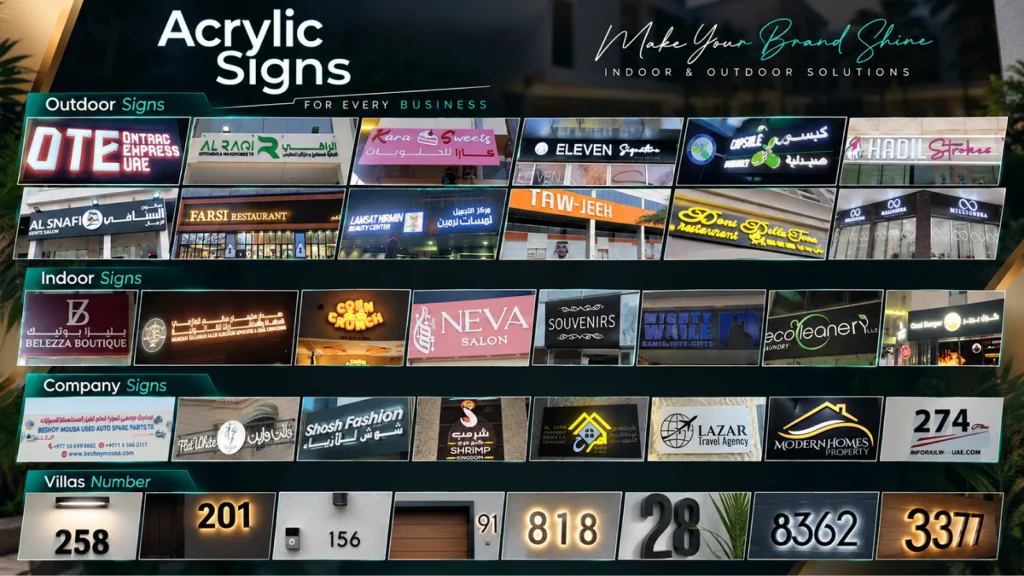
Introduction
3D Signage Design | Illuminated & Non-Illuminated Signs in UAE
Signage is often the first visual point of contact between a business and its customers. That is why having a large sign or simply displaying a company name is not enough. Effective signage should be easy to read from an appropriate distance, consistent with the brand identity, suitable for the façade and location, and capable of maintaining its visual impact during both daytime and nighttime.
This is where 3D signage, dimensional signs, and raised letters have become more impactful alternatives to traditional flat signs, particularly for retail stores, restaurants, companies, clinics, offices, and commercial businesses looking to create a more distinctive presence.
However, choosing 3D signage does not necessarily mean choosing illuminated signage. There are three-dimensional signs and raised letters without lighting, as well as illuminated solutions using front lighting, backlighting, or halo lighting. Each option serves a different purpose.
In this guide, we will explore 3D signage design, the difference between illuminated and non-illuminated signs, the materials used, lighting options, and how to determine the right size, color, typeface, and letter depth. We will also cover the factors that influence signage costs and the most common mistakes to avoid before production.
What Is 3D Signage?
3D signage consists of signs, letters, or visual elements manufactured with actual depth and thickness instead of being simple flat graphics applied to a single surface.
This added depth gives the design a stronger sense of dimension and visibility. It can be used for company names, logos, lettering, and visual elements associated with a brand identity.
Common applications include:
Raised letters
Dimensional logos
Illuminated letters
Backlit letters
Multi-layered signage
Shopfront signage
Interior signage for companies and exhibitions
The purpose of 3D design is not simply to add thickness to a graphic. It is to create a visual presence that works with the brand identity, the façade, and the actual viewing distance of the audience.
What Are Dimensional Signs?
Dimensional signs are a term commonly used to describe signage that features raised elements with actual physical depth.
When a company name is produced using individual raised letters, there is a visible difference in height, shadow, and perspective between the letters and the surface behind them.
This effect can be subtle and refined or bold and luxurious, depending on:
Letter depth
Material
Letter color
Background color
Mounting method
Lighting type, if applicable
Logo size
Façade characteristics
For this reason, there is no single letter depth or material that is suitable for every project.
What Is the Difference Between 2D and 3D Signage Design?
2D signage generally relies on a flat design that is printed or applied to a surface, while 3D signage adds actual depth to letters or visual elements.
| Feature | 2D Signage | 3D Signage |
|---|---|---|
| Depth | Flat | Three-dimensional |
| Letters | Printed or flat | Raised or dimensional |
| Natural Shadows | Limited | More visible due to depth |
| Visual Impact | Simple | More prominent |
| Lighting | Can be added | Can be integrated into letters and materials |
| Customization | High | High |
| Applications | Indoor and outdoor depending on material | Indoor and outdoor depending on design and material |
Choosing 3D does not automatically mean it is the better option. If a project requires simple informational signage, has limited space, or requires a more economical solution, a flat sign may be the more practical choice.
What Is the Difference Between Raised Letters and Flat Signs?
Raised letters are manufactured as individual elements with a defined thickness and mounted directly onto a façade or a background panel.
A flat sign, on the other hand, relies on a single surface carrying the design or text.
Raised letters are particularly effective when the priority is to highlight the brand name or logo rather than cover the entire façade with a complete graphic design.
They also give designers greater control over letter spacing, size, depth, materials, and lighting.
Types of 3D Signage
1. Illuminated 3D Signs
These signs combine dimensional depth with lighting, making them particularly suitable for façades that need a strong visual presence during nighttime hours.
The lighting can be integrated into the letters themselves, positioned behind them, or incorporated into specific elements of the design.
These solutions are widely used for:
Restaurants and cafés
Retail stores
Hotels
Companies
Clinics
Salons
Exhibition spaces
Businesses operating at night
2. Non-Illuminated 3D Signs
These signs do not contain an internal light source. Their visual effect depends on:
Depth
Material
Color
Finish
Natural shadows
Ambient lighting
This type of signage can be suitable for brands looking for a refined and understated appearance, or for locations where surrounding lighting is already sufficient.
3. Illuminated Raised Letters
Illuminated raised letters are among the most commonly used branding solutions when the business name is the main visual element of the façade.
Lighting can be:
Front-facing
Backlit
Halo lighting around the letters
Or a combination of several methods depending on the design
4. Non-Illuminated Raised Letters
These letters are manufactured with a specific depth and mounted onto the façade without internal lighting.
The final appearance can be enhanced through the right material and finish, such as metal, acrylic, or a combination of different materials.
What Types of Lighting Are Used in Signage?
Frontlit Signage
With front lighting, the light is visible from the front face of the letter or sign element.
This approach provides direct illumination and is suitable when readability and clear visibility are the main priorities.
Backlit Signage
With backlighting, the light source is positioned behind the letter or sign element so that the light appears on the surface surrounding it.
The result is often more subtle than direct front lighting, especially when an appropriate gap is maintained between the letters and the façade.
Halo Lighting
Halo lighting creates a soft glow around the letters through rear illumination.
This style is well suited to brands that want a refined and premium effect rather than direct, intense illumination across the face of the letters.
Important note: The choice of lighting should be based on the letter shape, material, façade color, viewing distance, and ambient lighting. No single lighting style is universally better for every project.
What Materials Are Used to Manufacture 3D Signage?
Acrylic
Acrylic is a versatile material that can be used for dimensional letters and signage elements, with different grades, colors, and finishes available depending on the design.
It is used across a variety of indoor and outdoor applications according to the required specifications.
PVC
PVC can be used for certain dimensional letters and signage elements, particularly in indoor applications and selected outdoor projects depending on the type, thickness, and manufacturing method.
It is relatively easy to shape, but selecting the correct grade for the specific project remains important.
Stainless Steel
Stainless steel is commonly used when a more premium metallic appearance and strong material presence are desired.
It can also be combined with materials such as acrylic to create layered visual effects.
Aluminium
Aluminium is a practical option for many signage applications, especially when a suitable weight and metallic appearance are required.
The appropriate thickness, finish, and installation method depend on the sign size, location, and intended application.
Acrylic + Stainless Steel
Combining acrylic and stainless steel can create multi-layered letters and logos, bringing together the visual characteristics of acrylic with the metallic appearance of stainless steel.
What Is the Best Material for Outdoor Signage?
There is no single material that is best for every façade.
Material selection depends on:
Sign location
Sun exposure
Humidity and dust
Letter size
Mounting method
Design
Budget
Required finish
Whether internal lighting is included
For this reason, the material should be selected after understanding the actual operating conditions rather than choosing based on price alone.
What Materials Are Suitable for Indoor Signage?
Indoor signage generally allows for a wider range of material options because it may not be exposed to the same outdoor conditions.
Potential options include:
Acrylic
PVC
Stainless Steel
Aluminium
Multi-material combinations
The best choice is the one that provides the right balance between design, weight, appearance, budget, and installation environment.
How Do You Choose the Right Signage Material?
Start with a simple question:
Where will the sign be installed, and how will it be viewed?
Then consider:
Is the signage indoor or outdoor?
Will it be illuminated?
What is the size of the letters?
What is the background color?
Does the project require a metallic, modern, or minimalist appearance?
How detailed is the logo?
How will the signage be mounted?
What level of finish is required?
The material can then be selected based on the actual project requirements rather than appearance alone.
The Importance of Brand Identity in Signage Design
One of the most common mistakes is treating signage as a separate element from the brand.
Effective signage should be an extension of the visual identity through:
Colors
Logo
Typography
Contrast
Proportions
Composition
Finishes
Lighting style
If the brand identity is premium and understated, for example, a simple metallic finish may be more appropriate than a sign with multiple colors and aggressive lighting.
In contrast, youthful or highly commercial brands may benefit from bolder colors and stronger visual compositions.
How Do You Choose Signage Colors?
Choosing a sign color should not be based only on the client’s preferred color.
You should consider:
Façade color
Logo color
Letter color
Lighting intensity
Viewing distance
Contrast
Nature of the business
The primary goal is to ensure that the brand name remains clear and readable, especially from the street or from the actual viewing distance.
How Do You Choose the Right Typeface?
Not every typeface is suitable for manufacturing as a three-dimensional letter.
Important considerations include:
Stroke thickness
Letter details
Internal spaces
Letter spacing
Manufacturability
Readability from a distance
Compatibility with the brand identity
Some logos also contain highly detailed elements that may require careful simplification before manufacturing while maintaining the original personality of the logo.
How Is Letter Depth Determined?
Letter depth is not purely an aesthetic decision.
It is related to:
Final letter size
Material
Manufacturing method
Lighting system, if applicable
Installation method
A large outdoor letter may require a completely different construction approach from a small letter installed inside an office.
The correct depth should therefore be determined after reviewing the final design, dimensions, and production requirements.
How Do You Determine the Right Signage Size?
The correct size does not necessarily mean making the sign as large as possible.
The design should take into account:
Façade width
Façade height
Spacing between the sign and other façade elements
Viewing position
Traffic speed
Name visibility
Local regulations, where applicable
Relationship between the logo and surrounding space
A strong design leaves sufficient breathing room around the brand name instead of filling every available part of the façade.
When Is Illuminated Signage the Better Choice?
Illuminated signage becomes particularly useful when:
The business operates during evening hours.
The façade faces an active street at night.
There is strong visual competition.
The business name needs to remain visible at night.
Lighting is an important part of the location’s visual identity.
However, the lighting should not overpower the brand itself.
When Is Non-Illuminated Signage the Better Choice?
Non-illuminated signage can be an excellent option when:
Ambient lighting is already sufficient.
The business mainly operates during the daytime.
A calm and premium appearance is preferred.
The façade does not require additional internal lighting.
The design itself is strong enough through its material and dimensional depth.
Advantages of Illuminated 3D Signage
Key advantages include:
Strong visual presence
Better nighttime visibility
Ability to emphasize brand identity
Multiple lighting distribution options
Suitable for façades requiring stronger evening visibility
However, successful illuminated signage depends on design and execution, not simply on adding LED lighting.
Advantages of Non-Illuminated 3D Signage
Major advantages include:
Clean and elegant appearance
Strong emphasis on material and finish
Suitable for premium design concepts
No dependence on internal lighting
Wide range of material and finish options
What Factors Affect the Cost of Signage?
The cost does not depend on size alone.
Several factors may influence the final project cost:
Material
Acrylic, PVC, aluminium, stainless steel, and other materials differ in cost, finish, and production method.
Sign Size
Larger dimensions may require more material and can affect production, transportation, and installation requirements.
Letter Depth
Greater depth may require more material and a different manufacturing approach.
Lighting Type
Illuminated signs require electrical components, a lighting system, and suitable internal construction.
Logo Complexity
Complex logos may require more precise manufacturing than simple text.
Installation Method
Installation requirements vary depending on the façade, sign size, and location.
Finishes
Metal finishes, paint, gloss, matte surfaces, and layered treatments may all influence the final cost.
For this reason, it is not possible to provide an accurate price based on the service name alone. The required dimensions, design, materials, location, and installation method typically need to be reviewed first.
Does the Price of a Sign Depend Only on Its Size?
No.
Two signs with exactly the same dimensions can have significantly different costs due to differences in material, depth, lighting, number of components, mounting method, finishes, and manufacturing complexity.
The correct way to compare quotations is therefore to compare the full technical specifications of the project, not just the final price.
What Is the Difference Between a Cheap Commercial Sign and a Professional Sign?
The difference is not always obvious at first glance.
It may become visible through:
Edge quality
Cutting precision
Letter alignment
Lighting consistency
Installation quality
Color accuracy
Finishing quality
Treatment of small details
Compatibility with the façade
That is why the lowest-priced option is not necessarily the most cost-effective in practice, especially when poor execution leads to remanufacturing or additional modifications.
Common Mistakes in Signage Design
Using Too Much Text
Outdoor signage is not a brochure. The business name or primary message should receive the highest priority.
Poor Contrast
When letter colors are too close to the background, readability will suffer even when high-quality materials are used.
Choosing a Typeface That Is Difficult to Read
A typeface that looks attractive in digital artwork may not work well as a manufactured letter, especially at small sizes.
Overusing Lighting
Excessively strong lighting can reduce the clarity of logo details instead of improving them.
Ignoring the Façade
The sign should never be designed without considering the color and architecture of the building.
Failing to Consider Nighttime Appearance
If the business operates at night, the sign should be evaluated under nighttime lighting conditions rather than only in a daytime mockup.
Ignoring Installation Requirements
The design must be practical to manufacture, install, maintain, and service.
How Do You Choose a Signage Design That Fits Your Brand?
Ask five essential questions:
What should customers notice first?
Is it the company name, the logo, or the product?
From where will the signage be viewed?
By pedestrians? From passing vehicles? From inside a shopping mall?
When will it be viewed?
During the day, at night, or throughout the entire day?
What personality should the brand communicate?
Luxury, modern, minimal, bold, technical, or corporate?
What does the façade allow?
The available space, building structure, service locations, and existing installations can all influence the final decision.
How Do You Choose a Signage Design and Manufacturing Company?
Do not rely on portfolio images alone.
Review:
Real project examples
Quality of details
Materials used
How the design is presented before production
Ability to revise the design
Installation method
Warranty and maintenance, when available
Clarity of the technical quotation
Ability to actually manufacture the design rather than only create it digitally
Ideally, the same provider should understand design, manufacturing, and installation, so the final concept does not become a beautiful visual that is difficult to produce in reality.
Questions to Ask Before Ordering Signage
Before approving the project, ask:
What material is being recommended and why?
Is the signage suitable for indoor or outdoor use?
What type of lighting will be used?
How will the signage be mounted?
Does the quotation include design?
Does it include manufacturing and installation?
Are there similar projects I can review?
Are there any site requirements or local approvals?
What warranty and maintenance details are available?
What files are required to begin?
The Signage Production Process: From Concept to Installation
1. Business Assessment
Understand the brand, façade, and intended use.
2. Logo Review
Make sure the design can be manufactured accurately.
3. Visual Direction
Determine the appropriate material, color, and visual style.
4. Design Development
Create the dimensions, composition, and production details.
5. Design Review
Resolve any potential issues before manufacturing begins.
6. Material Selection
Define the material, thickness, and finish.
7. Manufacturing
Cut, assemble, and finish the letters and signage elements.
8. Lighting Testing
When lighting is included, test light distribution before final installation.
9. Installation
Mount the signage according to the façade and project specifications.
10. Final Inspection
Check alignment, mounting, finish quality, and lighting performance.
How to Maintain Your Signage
Maintenance requirements depend on the material and installation environment, but it is generally useful to:
Clean the signage using methods suitable for the material.
Remove accumulated dust.
Inspect mounting points when necessary.
Monitor any changes in lighting performance.
Address surface damage at an early stage.
Avoid cleaning products that may damage the finish.
Have electrical maintenance performed by qualified technicians when required.
Which Is Better: Illuminated or Non-Illuminated 3D Signage?
There is no single answer.
When nighttime visibility is the priority, illuminated signage may be the more suitable option.
When the project calls for a quieter and more refined appearance that emphasizes material, depth, and finishing, non-illuminated signage may be the better choice.
The final decision should balance brand identity, project location, viewing conditions, type of business, budget, and installation requirements.
Comparison Table of Signage Types
| Type | Appearance | Daytime | Nighttime | Lighting | Common Use | Premium Look | Relative Cost |
|---|---|---|---|---|---|---|---|
| Illuminated 3D | Dimensional and raised | Excellent | Excellent | Internal/backlit depending on design | Shops, façades, companies | High | $$$ |
| Non-Illuminated 3D | Dimensional and raised | Excellent | Depends on ambient lighting | No internal lighting | Offices, companies, shops | High | $$ |
| Illuminated Raised Letters | Individual illuminated letters | Excellent | Excellent | Frontlit/backlit depending on design | Brand names and logos | High | $$$ |
| Non-Illuminated Raised Letters | Individual raised letters | Excellent | Depends on ambient lighting | No internal lighting | Entrances, offices, façades | High | $$ |
| 2D Signage | Flat | Good to Excellent | Depends on external lighting | Depends on execution | Traditional signs and messaging | Variable | $ |
Note: The cost symbols above are for relative comparison only and do not represent actual market prices.
FAQ: Frequently Asked Questions
What Is 3D Signage?
3D signage consists of signs or letters manufactured with actual depth and thickness rather than relying solely on flat graphics, creating a stronger dimensional visual effect.
What Is the Difference Between Illuminated and Non-Illuminated 3D Signs?
Illuminated signs include an integrated or rear lighting system depending on the design, while non-illuminated signs rely on material, depth, and surrounding light.
What Is the Best Material for Outdoor Signage?
There is no single material suitable for every application. Selection depends on the sign location, size, exposure to outdoor conditions, design, and mounting method.
Can a Logo Be Manufactured as 3D Letters?
Yes. Many logos can be produced as dimensional letters or elements depending on their design details and manufacturing requirements.
Are Raised Letters Better Than Flat Signage?
It depends on the objective. Raised letters are effective for highlighting a brand name and adding depth, while flat signs may be more suitable for informational content or designs requiring a larger graphic area.
Are Illuminated Signs Better for Retail Stores?
They are often suitable when the business needs strong nighttime visibility, but the final choice depends on the store location, surrounding lighting, and design.
What Determines the Price of a Sign?
Size, material, thickness, design, lighting, mounting method, finishing, and manufacturing complexity can all affect the final cost.
Can Multiple Materials Be Combined in One Sign?
Yes. Materials such as acrylic and stainless steel can be combined to create layered visual effects.
Can Illuminated Letters Be Made in Different Colors?
Yes, depending on the material, lighting system, and design requirements.
What Is Halo Lighting?
Halo lighting is a rear-lighting technique that creates a soft glow around a letter or sign element mounted in front of a background surface.
Does Signage Design Differ Depending on the Business?
Yes. A restaurant sign should not necessarily be treated in the same way as signage for a clinic, technology company, or hotel because the branding, audience, and viewing environment are different.
What Should I Prepare Before Requesting a Quotation?
It is useful to prepare the logo, approximate façade dimensions, photos of the location, sign location, and any specific branding or lighting requirements.
Get Your Custom Signage Designed
Do you have a new façade or want to upgrade your existing signage?
Send your logo, façade photo, approximate dimensions, and project location, and we can assess the most suitable direction for 3D signage design in terms of materials, lighting, size, and visual composition.
Request a custom design or quotation before production begins.
Conclusion
3D signage design is much more than simply converting text into raised letters. Successful signage begins with understanding the brand, façade, and viewing environment, followed by selecting the right size, material, depth, lighting, and finish to support the business objective.
An illuminated 3D sign may be the right solution for a retail store that needs a strong nighttime presence, while non-illuminated raised letters may be more appropriate for a company looking for an elegant and understated appearance.
So before choosing a sign, do not ask only:
“How much does it cost?”
Also ask:
“Does the design fit my brand? Will it remain readable? Is the material suitable for the location? Does the lighting support the logo? And is the construction designed to perform reliably in the actual project environment?”
These are the questions that transform signage from a simple façade element into a genuine part of the brand identity.