
Brand Identity Design in Ajman /2026
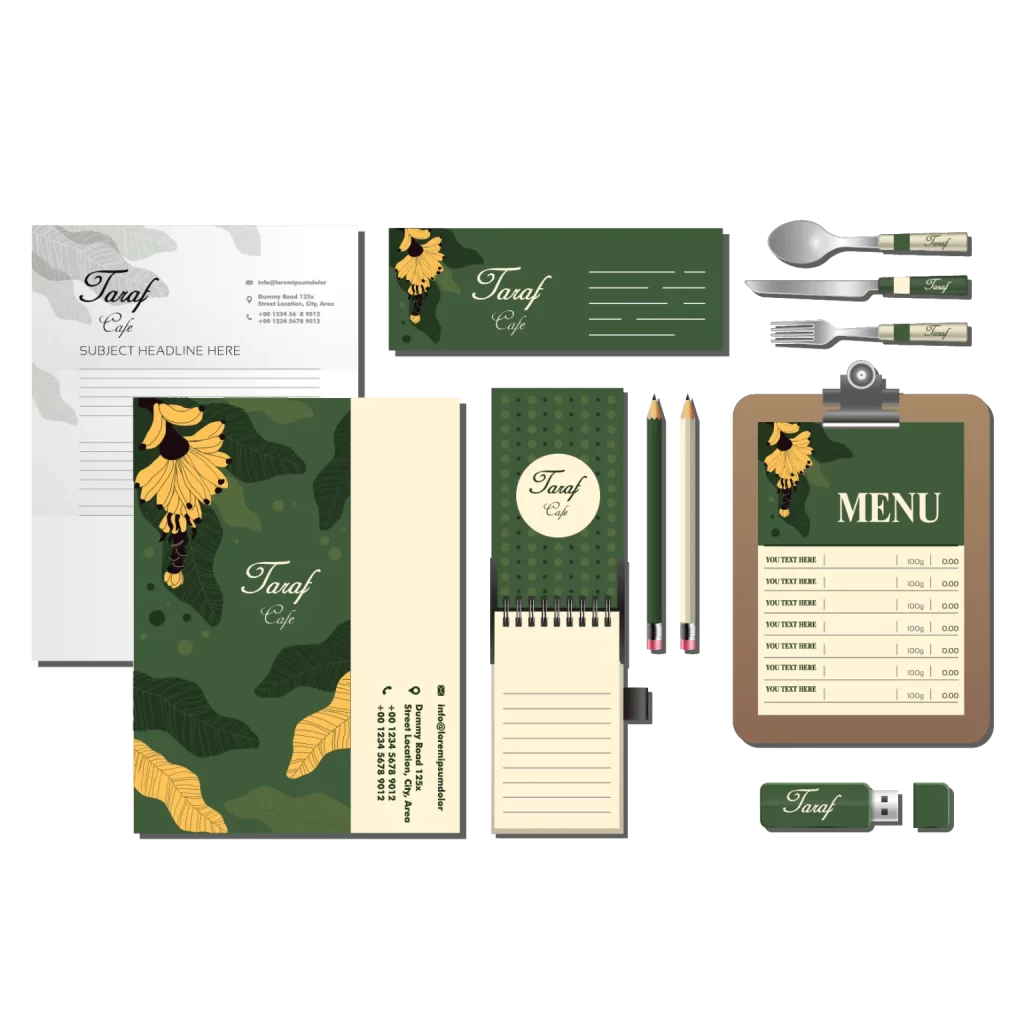
A business can offer excellent products or services and still struggle to create the right impression when its visual identity is weak, inconsistent, or poorly planned. A logo may look different across platforms, colors may change from one design to another, social media posts may not match the website, and printed materials may communicate a completely different style.
These inconsistencies can make an otherwise successful company appear less professional and can make it harder for customers to recognize and remember the brand.
Professional Brand Identity Design in Ajman provides a structured solution to this problem. It is not simply about creating an attractive logo. It is about developing a complete visual system that communicates what a company represents and keeps its appearance consistent across every customer touchpoint.
A professional brand identity can include logo design, logo variations, typography, color palettes, photography direction, icons, patterns, business cards, letterheads, packaging, social media templates, marketing materials, and brand guidelines.
For companies in Ajman and across the UAE, a consistent visual identity can create a stronger professional image and make marketing communication easier to manage. Whether you are launching a startup, improving an established business, repositioning your company, or preparing for expansion, your visual identity should be built around your business goals, target audience, market position, and long-term strategy.
A successful identity should not only look good. It should be recognizable, practical, flexible, scalable, and easy to apply across both digital and printed channels.
Businesses investing in Brand Identity Design in Ajman can create a more consistent and professional presence across digital and printed marketing channels.
What Is Visual Identity Design?
Visual Identity Design is the process of creating the visual language that a business uses to represent itself. It defines the elements, styles, and standards that help customers recognize the company and understand its personality.
Many business owners use terms such as logo, branding, brand identity, and visual identity interchangeably. Although these concepts are connected, they are not exactly the same.
Logo Design
A logo is the visual mark used to identify a company. It may be a wordmark, symbol, monogram, emblem, or combination mark.
A logo is one of the most visible parts of a brand, but it is only one element of a complete identity.
Brand Identity
Brand Identity is the broader system through which a business presents itself. Depending on the project, this can include visual identity, communication style, positioning, personality, messaging, and other strategic components.
Visual Identity
Visual Identity focuses on the visual expression of the business. This includes the logo, typography, colors, imagery, graphic elements, iconography, layouts, patterns, and branded applications.
Branding
Branding is the broader process of shaping how a business is positioned and perceived. It can include brand strategy, customer experience, communication, visual identity, content, marketing, and other activities.
A simple way to understand the difference is this:
The logo identifies the business. Visual identity gives it a consistent visual language. Branding shapes the broader perception of the business.
Why Is Brand Identity Design in Ajman Important for Businesses?
Businesses communicate with customers in many different ways. A potential customer may see an Instagram post, visit a website, receive a quotation, walk past a storefront, pick up a business card, see an advertisement, or receive a branded package.
If every touchpoint looks different, the company becomes difficult to recognize.
Professional Brand Identity Design in Ajman helps businesses create a consistent visual foundation that can be applied across these different environments.
Builds Customer Trust
A consistent visual identity can help a business appear organized and professional. Customers often make initial judgments based on what they see before they speak with a company or try its products.
Creates a Professional Business Image
A coordinated logo, color system, typography, imagery, and layout can make the company look more established and intentional.
Strengthens Brand Recognition
Recognition is not created by the logo alone. A combination of distinctive colors, typography, photography, patterns, and graphic elements can become associated with the brand.
Improves Brand Recall
When customers repeatedly encounter a consistent visual language, it becomes easier for them to connect that appearance with the business.
Creates Marketing Consistency
A defined identity gives designers and marketing teams a clear framework for creating advertisements, brochures, social media posts, packaging, presentations, and other materials.
Improves the First Impression
A professional identity ensures that the business communicates the right image from the first interaction.
Supports Sales and Marketing
Professional branding can make sales and marketing materials more consistent. Teams no longer need to make basic visual decisions from scratch for every campaign.
What Does a Complete Brand Identity Include?
A professional Brand Identity Design in Ajman project should be built around the actual needs of the business.
A complete visual identity should be designed according to the business’s actual needs. Not every company requires the same number of deliverables, but several components are commonly included.
Logo
The logo is the central identifying element of the brand. It should be designed to work across different sizes, platforms, and applications.
Logo Variations
A complete logo system can include horizontal, vertical, compact, monochrome, reversed, and alternative versions.
These variations make the logo easier to use across websites, documents, packaging, signage, and social media.
Color Palette
A professional Color Palette defines the main brand colors, secondary colors, neutral tones, and appropriate usage rules.
Colors should support the brand personality and remain practical across both digital and print applications.
Typography
Typography is an important part of brand personality. The brand should define suitable fonts and a hierarchy for headings, subtitles, body text, captions, labels, and other communication.
Brand Icons
Custom icons can create a more recognizable design language for websites, presentations, brochures, social media graphics, and digital interfaces.
Patterns
Patterns, textures, and repeatable graphic elements can strengthen the identity and provide additional assets for packaging, stationery, backgrounds, and advertising.
Photography Style
A visual identity can define how photography should look and feel, including composition, lighting, subject selection, framing, and overall mood.
Graphic Elements
Graphic elements can include shapes, lines, illustrations, grids, frames, textures, and other visual devices used across marketing materials.
Business Cards
A business card should be an extension of the identity rather than an independent design. It should use the approved colors, typography, spacing, and logo system.
Letterheads and Envelopes
Professional stationery can be important for quotations, contracts, proposals, invoices, business correspondence, and other corporate documents.
Packaging
Packaging can become one of the strongest physical expressions of a brand, especially for retail, food, beauty, cosmetics, fashion, gifts, and product-based businesses.
Social Media Templates
Templates help businesses maintain consistency across posts, stories, promotions, announcements, campaigns, and other social content.
Brand Guidelines
Brand Guidelines explain how the identity should be used. They can define logo spacing, minimum sizes, approved colors, typography, imagery, layouts, and incorrect usage.
A brand identity becomes much more valuable when the company has clear standards that different teams and suppliers can follow.
How to Create a Professional Visual Identity
The process of Brand Identity Design in Ajman should begin with understanding the business and its target audience.
Creating a strong identity requires more than selecting colors and drawing a logo. The process should start with strategy and move gradually toward visual execution.
Understand the Brand
Start by understanding the business, its products or services, market position, competitors, values, strengths, goals, and personality.
A construction company should not automatically use the same design direction as a restaurant, beauty brand, technology startup, or real estate business.
Define the Target Audience
The brand should be designed for the customers the company wants to attract.
Consider customer expectations, purchasing behavior, demographics, cultural context, market environment, and the level of trust or authority the business needs to communicate.
Develop the Brand Personality
Decide how the company should feel.
It may be:
- Professional
- Premium
- Modern
- Trustworthy
- Approachable
- Bold
- Elegant
- Technical
- Traditional
- Innovative
The selected personality should guide the visual direction.
Choose the Right Color Palette
Colors should be selected strategically rather than purely based on personal preference.
The palette should complement the brand personality and remain flexible enough for different applications.
Select Professional Typography
Typography needs to balance personality, readability, and practicality.
The chosen typefaces should work across websites, advertising, presentations, social media, printed documents, packaging, and other materials.
Design the Logo System
The logo should be tested in realistic situations rather than evaluated only on a presentation screen.
Test it at small and large sizes, in monochrome, on light and dark backgrounds, and across both print and digital applications.
Build Supporting Visual Elements
Once the logo and core design direction are established, build supporting elements such as icons, patterns, imagery, layouts, illustrations, and graphic devices.
These components allow the business to create distinctive communication without placing the logo everywhere.
Create Brand Guidelines
Document the visual standards so that employees, designers, marketers, printers, and suppliers can apply the identity correctly.
Test the Identity Across Different Platforms
A professional identity should be tested across real applications such as:
- Website
- Social media
- Business cards
- Brochures
- Presentations
- Packaging
- Signage
- Advertising
- Documents
- Promotional products
The identity should perform well in practical business situations, not just in a portfolio presentation.
Common Visual Identity Design Mistakes
Many companies make branding decisions based only on appearance and overlook consistency and strategy.
Choosing Colors Without Strategy
A color may look attractive but still fail to communicate the desired personality or positioning.
Relying Only on the Logo
A logo cannot represent every aspect of a business. Without supporting visual elements, the brand can quickly become repetitive.
Using Too Many Fonts
Too many fonts can make communication look inconsistent and reduce visual hierarchy.
Not Having Brand Guidelines
Without documented standards, colors, spacing, typography, and logo usage may gradually change.
Using Different Styles Across Platforms
A company may have an excellent logo but still appear inconsistent if its website, social media, brochures, packaging, and advertising all use different visual systems.
Copying Competitors
Competitor research is useful for understanding the market, but copying competitor identities makes differentiation difficult.
Designing for Aesthetics Instead of Audience
A design can look impressive while still being wrong for the target customer. The audience and business strategy should guide the visual decisions.
Using Low-Quality Assets
Low-resolution images, incorrect file formats, poor typography, and unsuitable logo files can reduce the quality of the final result.
Ignoring Digital and Print Requirements
A design created only for social media may not perform correctly on packaging, signage, stationery, or large-format printing.
Visual Identity for Different Types of Businesses
Effective Brand Identity Design in Ajman should always reflect the industry, audience, and positioning of the business.
Every business requires a visual identity that reflects its own market and audience.
Real Estate
Real estate companies often need branding that communicates trust, stability, professionalism, and quality.
Applications may include property brochures, social media posts, signage, presentations, listings, business cards, and sales materials.
Restaurants and Cafes
Restaurants and cafés have many opportunities to use branding through menus, packaging, cups, uniforms, signage, delivery materials, websites, and social media.
Retail
Retail brands need identity systems that work across storefronts, shopping bags, labels, product packaging, promotions, and digital advertising.
Construction Companies
Construction businesses may need branding across vehicles, uniforms, helmets, site signage, company profiles, proposals, presentations, and printed documents.
Medical Businesses
Medical brands generally require communication that feels professional, clear, and trustworthy.
Their identity can extend to clinics, signage, websites, forms, social media, staff materials, and patient communication.
Corporate Companies
Corporate organizations often require more comprehensive Corporate Branding systems for presentations, reports, stationery, proposals, internal communication, signage, and digital platforms.
E-commerce Businesses
E-commerce brands need their identity to work across websites, packaging, product photography, digital advertising, email marketing, social media, and customer unboxing experiences.
Startups
Startups need flexible branding that can grow with the company. Their identity should be professional while remaining practical for small teams and future expansion.
Why Businesses in Ajman and the UAE Need Professional Branding
Businesses in Ajman and across the UAE communicate with customers through multiple physical and digital channels.
A customer may discover a business through social media, Google Search, an online advertisement, a website, a storefront, an exhibition, packaging, or printed marketing material.
This makes Brand Identity Design in Ajman especially useful for businesses that want to maintain the same professional image across different touchpoints.
A company may use its identity on a business card, quotation, company profile, packaging, brochure, social media campaign, advertisement, storefront, vehicle, or presentation.
Without a defined system, these materials can gradually become visually inconsistent.
A professional Branding Company in Ajman can help businesses establish visual standards that make these applications more coordinated.
For companies serving customers throughout the UAE, branding may also need to work across Arabic and English communication, digital advertising, printed materials, social platforms, and multiple marketing formats.
Professional Branding Services in UAE should therefore focus on practical implementation as well as visual appearance.
The goal is to create a brand system that can continue to support the business as its marketing activities expand.
Visual Identity Design vs Logo Design
The difference between logo design and visual identity design is important when choosing a branding service.
Logo Design focuses on the creation of the visual mark that identifies the company.
Visual Identity Design develops the larger visual system surrounding that logo.
A company may have a professional logo while still lacking:
- Defined brand colors
- Typography standards
- Photography direction
- Iconography
- Patterns
- Layout principles
- Social media templates
- Stationery
- Packaging rules
- Brand Guidelines
The logo is therefore a component of the identity, not a complete replacement for it.
For businesses that communicate through multiple platforms, a complete visual system usually provides a more practical long-term foundation.
How Much Does Visual Identity Design Cost?
There is no single universal price for visual identity design because every project has different requirements.
The final cost can be influenced by several factors.
Project Size
A startup requiring a basic identity will have different needs from an established company that requires a complete corporate branding system.
Number of Deliverables
Logo variations, stationery, packaging, signage, presentations, social media assets, and marketing materials all affect the project scope.
Research and Strategy
Projects that include competitor research, target audience analysis, positioning, and brand strategy usually require more work than projects focused only on visual execution.
Brand Guidelines
A simple logo package is different from a complete identity system supported by detailed Brand Guidelines.
Number of Applications
Businesses that need branding across print, digital, packaging, signage, vehicles, and other applications require more development and testing.
Packaging
Packaging design can require additional technical considerations such as dimensions, materials, production methods, printing restrictions, and product variations.
Social Media Assets
Social media templates and digital assets can increase the long-term usability of the identity, particularly for companies running frequent campaigns.
Revision Rounds
The number of design concepts, refinement stages, meetings, and revision rounds can also affect the scope and final cost.
For this reason, professional branding projects should normally be quoted according to the actual requirements of the business rather than using one fixed price for every customer.
How to Choose the Right Branding Company
Choosing the right branding partner requires more than looking for attractive designs.
Start by reviewing the company’s portfolio. Look for complete identity projects instead of isolated logo designs.
A strong branding provider should demonstrate:
- Branding experience
- Strategic understanding
- Typography skills
- Visual consistency
- Print production knowledge
- Digital design experience
- Packaging knowledge
- Clear communication
- Structured revision process
- Ability to create Brand Guidelines
A professional Graphic Design Company in Ajman should understand the difference between a design that looks good on a screen and a design that works correctly in printing, packaging, signage, advertising, social media, and business documentation.
It is also important to ask what happens after the logo is approved.
A strong branding process should explain how the logo, colors, typography, imagery, graphic elements, and applications will work together as one consistent system.
Choosing the right approach to Brand Identity Design in Ajman can give businesses a stronger foundation for future marketing and growth.Frequently Asked Questions About Visual Identity Design
What is included in a visual identity?
A visual identity can include a logo system, color palette, typography, icons, patterns, photography direction, graphic elements, stationery, packaging, social media templates, and Brand Guidelines. The exact scope depends on the business and project requirements.
How long does brand identity design take?
The timeline depends on the scope of work, research requirements, number of deliverables, approval stages, and revision rounds. A simple identity project will usually require less work than a full corporate branding system.
What is the difference between branding and visual identity?
Branding is the broader process of shaping how a business is positioned and perceived, while visual identity focuses on the visual elements used to represent that brand consistently.
Do small businesses need a brand identity?
Yes. Small businesses can benefit from a clear identity because they often need to communicate across websites, social media, advertising, packaging, business cards, and other customer touchpoints.
Why are Brand Guidelines important?
Brand Guidelines establish rules for using logos, colors, typography, imagery, layouts, and other visual elements. They help different employees, designers, and suppliers maintain consistency.
Can a logo be enough for a business?
A logo can identify a business, but it does not normally provide all the visual standards needed for consistent communication across multiple platforms.
How does visual identity help marketing?
A defined identity gives marketing teams a consistent framework for creating advertisements, social media content, websites, brochures, packaging, presentations, and other materials.
How much does visual identity design cost?
The cost depends on the scope, strategy, deliverables, applications, Brand Guidelines, packaging requirements, social media assets, concepts, and revision rounds.
Is visual identity the same as corporate identity?
The terms overlap, but Corporate Identity Design generally refers to the visual and communication system of a company, especially in a corporate environment.
Can a visual identity work for both print and digital?
Yes. A properly developed identity should work across both environments, although individual applications may require technical adaptations for colors, file formats, sizes, and production requirements.
Conclusion
A strong brand is not created by a logo alone. It is built through a consistent visual system that communicates the personality, professionalism, and values of a business across every customer interaction.
Professional Brand Identity Design in Ajman can bring together logo design, typography, color palettes, graphic elements, photography, stationery, packaging, social media assets, marketing materials, and Brand Guidelines into one coordinated system.
The strongest identity is not simply the one that looks attractive. It is the one that supports business goals, communicates effectively with the target audience, differentiates the company from competitors, and remains practical across real-world applications.
For businesses in Ajman and throughout the UAE, a professionally developed identity can provide a strong foundation for advertising, digital marketing, packaging, social media, corporate communication, and future brand growth.
Whether you are launching a new company, updating an outdated identity, or trying to solve inconsistent branding across different platforms, investing in a structured identity can make your business communication more professional and more consistent.
Ready to build a stronger brand? Work with a professional branding and graphic design team in Ajman to create a visual identity tailored to your business, audience, and long-term goals.